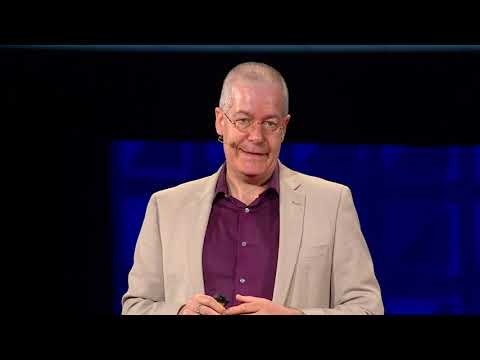
Stoicism as a philosophy for an ordinary life | Massimo Pigliucci | TEDxAthens
TEDx Talks
What's inside
4 thematic sections
Overview
This material lets you answer: What is Stoicism historically and why did it endure? What does it mean to live according to nature, and how do the virtues and the dichotomy of control structure a good life? How can you apply Stoic role ethics, integrity, and the power of choice to concrete modern situations?
Categories with Stoicism as a philosophy for an ordinary life | Massimo Pigliucci | TEDxAthens
Stoicism as a philosophy for an ordinary life | Massimo Pigliucci | TEDxAthens
Notes with 4 Sections
Stoicism originated when Zeno of Citium, after losing everything in a shipwreck, turned to philosophy in Athens and eventually founded his own school.
The transcript presents Zeno’s shipwreck as the turning point that led him to Athens, where he read Xenophon, sought out philosophers like Crates the Cynic, studied extensively, and ultimately established the Stoic school.
His ship was wrecked, everything was ruined, and he lost everything he had.
Stoicism differed from other ancient schools because it was practiced publicly in the marketplace rather than in a secluded institutional setting.
Unlike Plato’s Academy or Aristotle’s Lyceum, which gathered in specific locations, Stoic philosophers spoke among the public in the stoa (marketplace), discussing life and how to improve it.
They became known as the Stoics because they discussed philosophy in the stoa—the marketplace.
Stoicism became a major philosophical movement in the Hellenistic world and Rome, producing influential figures such as Seneca and Marcus Aurelius.
The transcript states that Stoicism spread from the Hellenistic world to the Roman Republic and Empire, and that prominent thinkers like Seneca and Marcus Aurelius emerged from the school, influencing politics, literature, and later generations.
Stoicism became one of the mainstream schools of ancient philosophy.
Stoicism significantly shaped Western thought by influencing Christianity and major philosophers from late antiquity to modernity.
The speaker traces Stoicism’s transmission from Paul of Tarsus to Thomas Aquinas, then to Descartes and Spinoza, arguing that its familiarity today is due to its deep integration into Christian theology and later modern philosophy.
Even today Stoicism is familiar to many people because it influenced Christianity.
With the rise of Christianity, Stoicism—along with other ancient philosophical schools—eventually declined.
The transcript directly links the emergence of Christianity to the fading of Stoicism and other ancient philosophical traditions.
With the rise of Christianity, all ancient philosophical schools, including Stoicism, eventually declined.
In these notes
- Thematic Sections
Add these24concepts to your library
 Notion, Obsidian or Markdown.